Alabama's Native Wildlife and Why It Matters
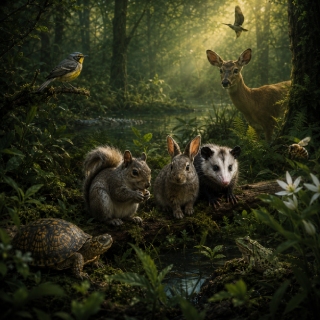
Few states can match the sheer variety of animals living within their borders. Alabama hosts one of the most biologically diverse collections of native wildlife in the eastern United States, spanning mammals, birds, reptiles, amphibians, fish, and insects that together keep natural systems running.
White-tailed deer and black bears represent the larger mammals most residents recognize, but the state's wildlife story runs much deeper. Eastern box turtles move slowly through forest floors, dispersing seeds as they go. American alligators regulate wetland populations of fish and waterfowl. Dozens of frog species signal the health of streams and ponds through their sensitivity to water quality. Each group fills a role that others depend on.
Songbirds alone handle enormous amounts of pest control. A single pair of Carolina wrens feeding nestlings can consume hundreds of caterpillars in a week. Native bees, including more than 400 species found across Alabama, pollinate wild plants and agricultural crops alike. Without them, food production and forest regeneration both suffer.
There's no denying that public awareness shapes how well these animals fare. When people recognize a gopher tortoise or a little brown bat as a neighbor rather than a nuisance, conservation outcomes improve. Alabama's native wildlife isn't just a backdrop to outdoor recreation. It actively maintains soil health, water quality, and the food webs that sustain communities across the state.
From Mountains to Marshes: The Habitats That Shape Our State
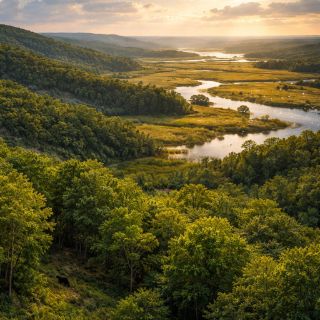
Few states pack as much geographic variety into their borders as Alabama does. The terrain shifts dramatically as you move from north to south, and each change in elevation, soil type, or water source brings a different set of plants and animals with it.
Appalachian Foothills and Mixed Forests
The northeastern corner of Alabama rises into the southern tail of the Appalachian Mountains. These forested ridges and valleys shelter black bears, timber rattlesnakes, and a remarkable range of salamander species. Hardwood forests of oak, hickory, and tulip poplar dominate here, creating layered canopies that support everything from migratory warblers to white-tailed deer.
Pine Woodlands and Prairies
Moving south and west, longleaf pine once covered millions of acres across central Alabama. Much of that original forest was cleared, but remaining stands support red-cockaded woodpeckers and gopher tortoises. The Black Belt region cuts through the middle of the state with its dark, alkaline soils and remnant prairies, a habitat type rare enough that its native plant communities draw botanists from across the country.
Rivers, Wetlands, and Gulf Coast Marshes
Alabama's river systems rank among the most biodiverse in North America, home to an extraordinary number of freshwater mussel and fish species found nowhere else. Coastal wetlands along Mobile Bay filter water, buffer storms, and provide nursery habitat for shrimp, blue crabs, and dozens of fish species.
Healthy habitats depend on clean water, native plants, and connected corridors between wild areas. When those connections break down, species lose the ability to move, feed, and reproduce across their natural range.
How Wildlife Changes With the Seasons in Alabama
Alabama’s wildlife follows a seasonal rhythm shaped by temperature, rainfall, food supply, and breeding cycles. Understanding these changes helps explain why certain animals become more visible at different times of year, from spring nesting activity to winter shelter-seeking behavior.
Spring: Migration and Breeding Activity
Each year, warmer temperatures and longer days trigger one of the most active periods in Alabama's natural calendar. Neotropical songbirds like warblers and tanagers pass through in April and May, stopping along the coast and in river bottomlands to rest and feed. Native species such as the Eastern bluebird begin nesting as early as March. Wetlands fill with frog calls almost overnight once overnight temperatures stabilize above 50°F.
Summer: Nesting, Reptiles, and Insects
Heat and humidity push reptile activity into high gear. Broadhead skinks and five-lined skinks become common sights on sunny logs and fence posts. Fireflies signal from meadows at dusk, and dragonflies patrol pond edges in numbers that can feel almost prehistoric. Many birds are raising second broods by July, and backyard feeders stay busy.
Fall: Movement and Food Gathering
Cooler nights shift animal priorities toward food and movement. White-tailed deer enter the rut in October and November, making them far more visible along roadsides than at any other time of year. Hawks funnel south along ridgelines, and monarch butterflies drift through open fields headed for Mexico.
Winter: Shelter and Shifting Patterns
Some species go quiet, but Alabama winters are rarely still. American robins form large flocks that descend on berry-laden trees. Black bears in the northern counties enter a lighter torpor than true hibernation, occasionally moving on warm days. Waterfowl numbers peak on reservoirs and coastal marshes from December through February.
Stewardship Starts With Knowing Local Ecosystems
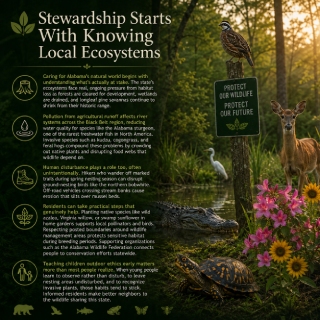
Caring for Alabama's natural world begins with understanding what's actually at stake. The state's ecosystems face real, ongoing pressure from habitat loss as forests are cleared for development, wetlands are drained, and longleaf pine savannas continue to shrink from their historic range. Pollution from agricultural runoff affects river systems across the Black Belt region, reducing water quality for species like the Alabama sturgeon, one of the rarest freshwater fish in North America. Invasive species such as kudzu, cogongrass, and feral hogs compound these problems by crowding out native plants and disrupting food webs that wildlife depend on.
Human disturbance plays a role too, often unintentionally. Hikers who wander off marked trails during spring nesting season can disrupt ground-nesting birds like the northern bobwhite. Off-road vehicles crossing stream banks cause erosion that silts over mussel beds.
Residents can take practical steps that genuinely help. Planting native species like wild azalea, Virginia willow, or swamp sunflower in home gardens supports local pollinators and birds. Respecting posted boundaries around wildlife management areas protects sensitive habitat during breeding periods. Supporting organizations such as the Alabama Wildlife Federation connects people to conservation efforts statewide.
Teaching children outdoor ethics early matters more than most people realize. When young people learn to observe rather than disturb, to leave nesting areas undisturbed, and to recognize invasive plants, those habits tend to stick. Informed residents make better neighbors to the wildlife sharing this state.
Knowing Nature Helps Alabama Protect What Matters
Every season spent paying attention to Alabama's natural world – watching a wood duck return to a beaver pond in March, or noticing the first monarch butterflies moving through in October – builds a kind of literacy that shapes how people treat the land around them. When residents understand which species depend on longleaf pine forests, or why blackwater streams in the coastal plain support fish found nowhere else on earth, everyday choices start to carry more weight. Where people walk, what they plant in their yards, how they respond to a snake on a hiking trail – all of it connects back to awareness. There's no denying that conservation depends less on distant policy than on the accumulated habits of people who actually know what they're looking at. Alabama's biodiversity is genuinely remarkable, and it rewards those who take time to learn it. Visiting natural areas responsibly, supporting local land trusts and wildlife programs, and sharing that knowledge with younger generations are all ways of passing something forward. The state's ecosystems have survived a great deal, but they need people who care enough to stay curious about them.